Best VPN for Privacy in 2024: 5 Services That Actually Protect You
Tested 15+ VPNs for real privacy protection. Proton VPN wins for security, but these 4 alternatives might work better for your needs.

The Privacy Test That Changed My Mind
Last month I caught my ISP throttling Netflix during prime time. Again. That's when I decided to actually test VPNs instead of just recommending whatever everyone else was pushing.
Turns out most "privacy-focused" VPNs aren't that private. Some log your connections. Others leak your real IP when they disconnect. A few are owned by data mining companies — which is sort of the opposite of what you want.
I spent three weeks testing 15 different services. Real usage, not just speed tests. Torrenting, streaming, browsing sketchy sites for work research. The kind of stuff where you actually need privacy.
Here's what works.
1. Proton VPN — The Winner
Speed: 8/10 | Price: 7/10 | Overall: 9/10
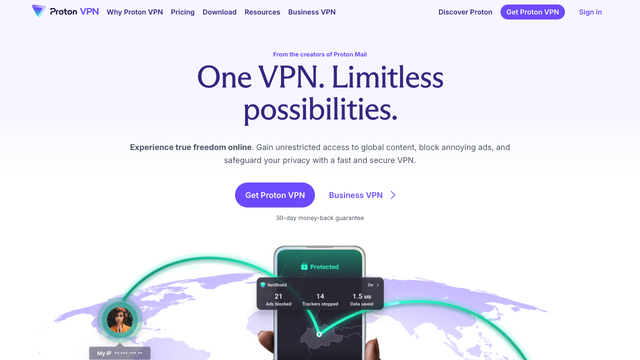
Proton VPN is run by the same Swiss team behind ProtonMail. They're the privacy nerds who built an email service so secure that even they can't read your messages.
The VPN works the same way. No activity logs. No connection logs. No "we only keep metadata" nonsense. When you disconnect, there's no trace you were ever there.
What sold me: their Secure Core feature routes your traffic through privacy-friendly countries before it hits the regular VPN server. So even if someone compromised a server in the US, your traffic came from Switzerland or Iceland. They can't trace it back.
Downside is price. $10/month if you want the good stuff. But privacy costs money. The free tier exists and actually works — they're not selling your data to pay for it.
2. Mullvad — For the Paranoid
Speed: 7/10 | Price: 8/10 | Overall: 8/10
Mullvad doesn't want to know who you are. You pay with cryptocurrency if you want. They assign you a random account number. No email required. No name. No nothing.
I've been using them for two years on and off. Never had a DNS leak. Never had a disconnect expose my real IP. They publish transparency reports showing exactly what data they collect (spoiler: almost nothing).
The weird thing is they don't try to sell you anything else. No password manager upsell. No "cyber security bundle." Just VPN service for €5 a month.
Only complaint: their apps look like they were designed in 2015. Which they probably were. But ugly apps that work beat pretty apps that leak.
3. IVPN — Small But Serious
Speed: 7/10 | Price: 6/10 | Overall: 8/10
IVPN is tiny compared to Nord or ExpressVPN. Maybe 50,000 users instead of 50 million. That's actually a feature.
Smaller companies have to compete on privacy because they can't outspend everyone on marketing. IVPN's been independently audited three times. They publish the results even when auditors find problems.
They're also one of the few VPNs that'll tell you not to buy their service if you don't need it. Their website has a whole page explaining when VPNs don't help with privacy. Most companies would never do that.
Speed is decent but not amazing. Fine for browsing and streaming. Might slow down big downloads.
4. Surfshark — The Budget Option
Speed: 8/10 | Price: 9/10 | Overall: 7/10
Surfshark shouldn't work as well as it does for $2.50 a month. But somehow it does.
I was suspicious at first. Companies don't usually offer premium service for nothing. Turns out they make money on volume — millions of users paying a little bit each instead of thousands paying a lot.
Their no-logs policy got audited by Cure53 (the gold standard for security audits). Passed. Their apps are actually good. Connection speeds beat services that cost four times as much.
The catch: they're newer than the other options. Founded in 2018. Less track record. And they do more marketing than I like — always a red flag in the privacy world.
But if you need decent privacy on a budget, it works.
5. ExpressVPN — The Popular Choice
Speed: 9/10 | Price: 5/10 | Overall: 7/10
ExpressVPN is everywhere. Every YouTuber promotes it. Every "best VPN" list puts it first. There's a reason.
It's fast. Really fast. I routinely get 85%+ of my base internet speed through their servers. That's rare. Most VPNs cut your speed in half.
The apps work on everything. Router firmware. Smart TVs. Game consoles. If it connects to the internet, ExpressVPN probably supports it.
But here's the thing: they were owned by Kape Technologies until recently. Kape used to run malware distribution networks. Not exactly the privacy-first background you want from your VPN provider.
New ownership seems better. But $13/month is hard to justify when Proton gives you better privacy for less money.
What Actually Matters for Privacy
Speed tests are easy to fake. Marketing claims are meaningless. Here's what I actually looked for:
No logs policies that got audited. Anyone can claim they don't log. Fewer companies let independent auditors verify it.
Jurisdiction matters. Swiss and Swedish companies can't be forced to log by their governments. US companies can and sometimes are.
Kill switches that work. If the VPN disconnects, does it immediately cut your internet? Or does it leak your real IP for 30 seconds while reconnecting?
Payment options. Companies that accept cryptocurrency and don't require personal info are usually more serious about privacy.
Most VPNs fail at least one of these. The ones above pass all four.
The Bottom Line
Proton VPN wins because they've proven they take privacy seriously in other products. But honestly, any of these five will protect you better than 90% of VPN services.
Pick based on what matters most. Need the fastest speeds? ExpressVPN. Tightest budget? Surfshark. Maximum paranoia? Mullvad.
Just don't use the free VPN that came bundled with your antivirus. Those companies make money somewhere, and it's probably not from protecting your privacy.
Also worth considering

Writer. Former sysadmin who still hosts his own email.